Session 4: Safety#
Learning Objectives#
By the end of this session, you will:
Understand the key risks associated with operating a biogas plant.
Know the safety precautions to prevent hazards.
Be aware of the built-in safety features of the CREATIVenergie system.
Have good operational habits to ensure safe and effective use.
Introduction#
Like electricity, bottled gas, and wood fires, biogas can be dangerous if not handled with care. By understanding the risks and following the precautions in this session, you can use biogas safely and effectively.
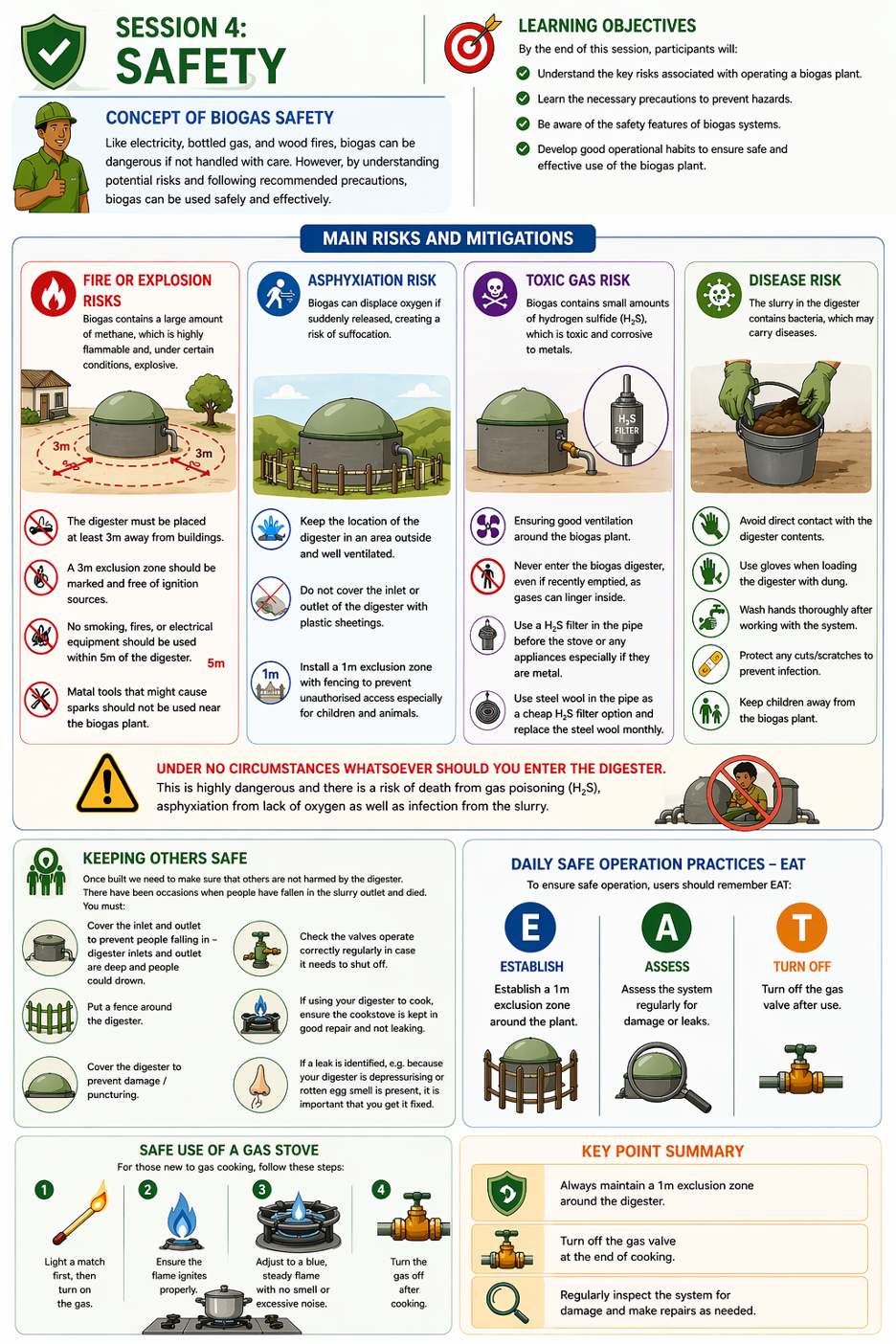
Fig. 14 Overview of the key safety topics in this session: fire and explosion risks, asphyxiation, toxic gas (H₂S), disease risk, keeping others safe, the EAT daily checklist, and safe stove use.#
Main Risks and Mitigations#
🔥 Fire or Explosion Risk#
Biogas contains methane, which is highly flammable and explosive under certain conditions.
Precaution |
Requirement |
|---|---|
Distance from buildings |
At least 3 m |
Exclusion zone |
3 m — no ignition sources |
No smoking / fires / electrical equipment |
Within 5 m of the digester |
Metal tools |
Avoid near the plant (spark risk) |
😮 Asphyxiation Risk#
Biogas can displace oxygen, creating a risk of suffocation.
Keep the digester outside and well ventilated.
Do not cover the inlet or outlet with plastic sheeting.
Install a 1 m fenced exclusion zone to prevent access by children and animals.
☠️ Toxic Gas Risk (H₂S)#
Biogas contains small amounts of hydrogen sulfide (H₂S), which is toxic and corrosive to metals.
Ensure good ventilation around the plant.
Never enter the digester — even if recently emptied. Gases linger inside.
Use a H₂S filter (steel wool works as a cheap option) in the pipe before the stove. Replace monthly.
🦠 Disease Risk#
The slurry contains bacteria that may carry disease.
Avoid direct contact with digester contents.
Use gloves when loading dung.
Wash hands thoroughly after working with the system.
Protect cuts and scratches.
Keep children away from the plant.
Danger
Under no circumstances should you enter the digester. This is highly dangerous — risk of gas poisoning (H₂S), asphyxiation from lack of oxygen, and infection from slurry. People have died from entering digesters.
👥 Keeping Others Safe#
Once built, make sure others are not harmed:
Cover the inlet and outlet — they are deep and people could fall in and drown.
Put a fence around the digester.
Cover the digester bag to prevent damage and puncturing.
Check valves operate correctly regularly.
Ensure the cookstove is in good repair and not leaking.
If you detect a leak (digester depressurising or rotten egg smell), get it fixed immediately.
⚠️ Safety Zone Diagram — click each zone
Each coloured ring represents a different safety requirement around the digester.
🔍 Spot the Hazards — click each marker to reveal the risk
Six hazards are hidden in this scene. Click the orange circles to find them.
Safety Features of the CREATIVenergie System#
Feature |
Purpose |
|---|---|
Biogas Plant Cover |
Protects against physical damage and UV exposure |
Main Gas Valve |
Quick gas shutoff — must be shut off at night and between each use |
Bubbler |
Prevents flame flashback from reaching the digester |
Pressure Release |
Excess slurry overflows through inlet/outlet at high pressure — prevents dangerous over-pressurisation |
Inlet/Outlet Covers |
Prevents people and animals falling in |
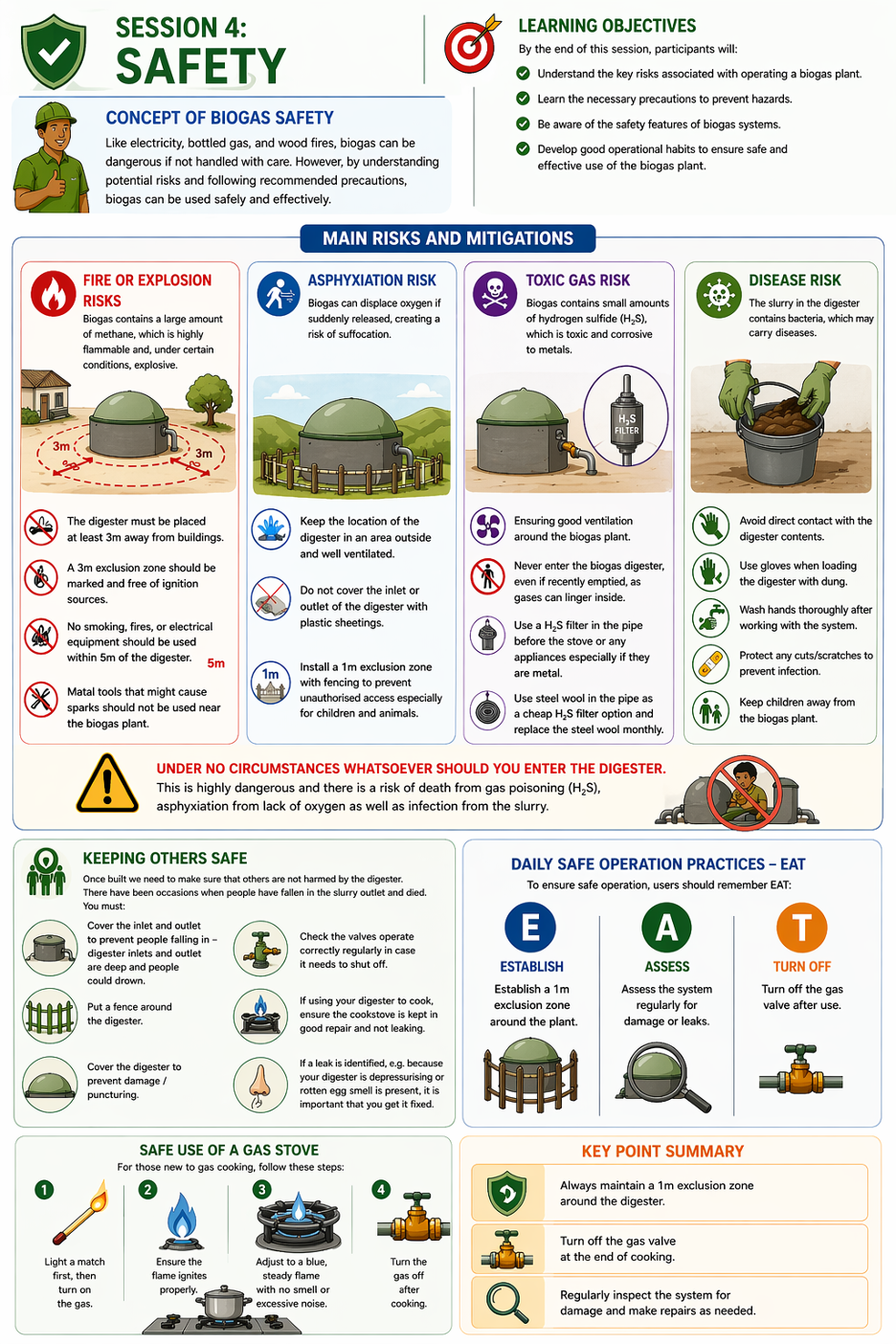
Fig. 15 Key safety components of the CREATIVenergie system and the correct procedure for safe stove use.#
Daily Safe Operation: The EAT Acronym#
To ensure safe operation, remember EAT:
E — Establish a 1 m exclusion zone around the plant
A — Assess the system regularly for damage or leaks
T — Turn off the gas valve after use
🧠 EAT — Daily Safety Checklist
🔍 Suspected Gas Leak? Follow these steps
Click each step as you complete it. If you find a leak, follow the action below.
Safe Use of a Gas Stove#
For those new to gas cooking:
Light a match first, then turn on the gas.
Ensure the flame ignites properly.
Adjust to a blue, steady flame — no smell or excessive noise.
Turn the gas off after cooking.
🎯 Practice: Identify the Hazards#
⚠️ Click on the Hazards
Six situations are shown below. Click the ones you think are hazardous — then check your answers.
Session 4 Quiz#
Fill in Q1. What is the three-letter safety acronym taught in this session?
Hint: it relates to what you should do and avoid with your digester.
Number Q2. What is the minimum safe distance (in metres) between a biogas digester and any building?
MC Q3. What does H₂S (hydrogen sulfide) smell like, and what makes it dangerous?
True / False Q4. The correct procedure when lighting a biogas stove is to turn on the gas valve first, then bring the match.
MC Q5. What is the purpose of the bubbler in the CREATIVenergie system?
MC Q6. When should the main gas valve be shut off?
Key Reminders#
Always maintain a 1 m exclusion zone around the digester.
Turn off the gas valve after cooking every time.
Regularly inspect the system for damage.
Never enter the digester for any reason.