Session 2: Sizing Your Digester#
Learning Objectives#
By the end of this session, you will be able to:
Understand why correct sizing is critical.
Determine the amount of available feedstock and calculate the daily feeding rate.
Understand retention time and its impact on biogas production.
Perform basic calculations to determine slurry and gas volume.
Select an appropriate digester size.
Case Study: Sizing a Digester#
Sanile walks through how to size a biodigester correctly for a typical farm.
Why Does Sizing Matter?#
It is vitally important that the digester is sized correctly:
Too small → not enough gas for your needs.
Too large → excess gas vents to atmosphere. Methane has 20× the global warming potential of CO₂ — venting it is actively harmful.
Start with what the farmer wants to use the biogas for, then work backwards to determine the size needed.
Step 1: Assess Your Feedstock and Gas Needs#
Start by answering two simple questions:
1. How much waste do you produce each day? (e.g. number of cows × kg of dung per day)
2. How much gas do you want to use? (e.g. cooking time per day)
Tip
A simple guide: one gas stove uses about 0.5 m³ of gas per hour. So cooking for 2 hours per day requires approximately 1 m³ of gas per day.
Compare what you have (available feedstock) against what you need (desired gas use).
⚖️ Supply vs Demand — Does your feedstock meet your gas needs?
Move the sliders to match your situation, then see if supply and demand balance.
Step 2: Daily Feeding Rate#
A biogas plant must be fed daily with a consistent amount of feedstock mixed with water to form a slurry.
General mixing ratio: 1 bucket of cow dung : ½ bucket of water (or 1:1 where water is plentiful).
The material must remain inside the digester long enough for complete breakdown — typically 40 days at 30–40°C. The larger the daily feeding amount, the larger the digester must be.
Step 3: Calculate Slurry Volume (Vs)#
Inside the digester there are two parts:
Slurry volume (Vs) — the liquid mixture of waste and water
Gas volume (Vg) — the space where biogas collects
Total Volume = Slurry Volume (Vs) + Gas Volume (Vg)
The slurry volume formula is:
Vs = Daily slurry input (m³) × Retention time (days)
Worked Example#
Given: 20 kg of cow dung per day, 1:1 mixing ratio, 40 days retention time.
Step |
Calculation |
Result |
|---|---|---|
Total daily slurry |
20 kg dung + 20 kg water |
40 kg/day |
Convert to volume (1000 kg = 1 m³) |
40 ÷ 1000 |
0.04 m³/day |
Multiply by retention time |
0.04 × 40 |
Vs = 1.6 m³ |
Step 4: Calculate Gas Volume (Vg)#
Cow dung produces approximately 0.04 m³ of biogas per kg of dung added per day (at 30–40°C with 40-day retention).
Vg = 0.04 m³/kg × Daily dung input (kg)
For the example above (20 kg/day):
Vg = 0.04 × 20 = 0.8 m³/day
Because gas is used daily, you only need to store about ⅔ to 1 day’s worth of gas production.
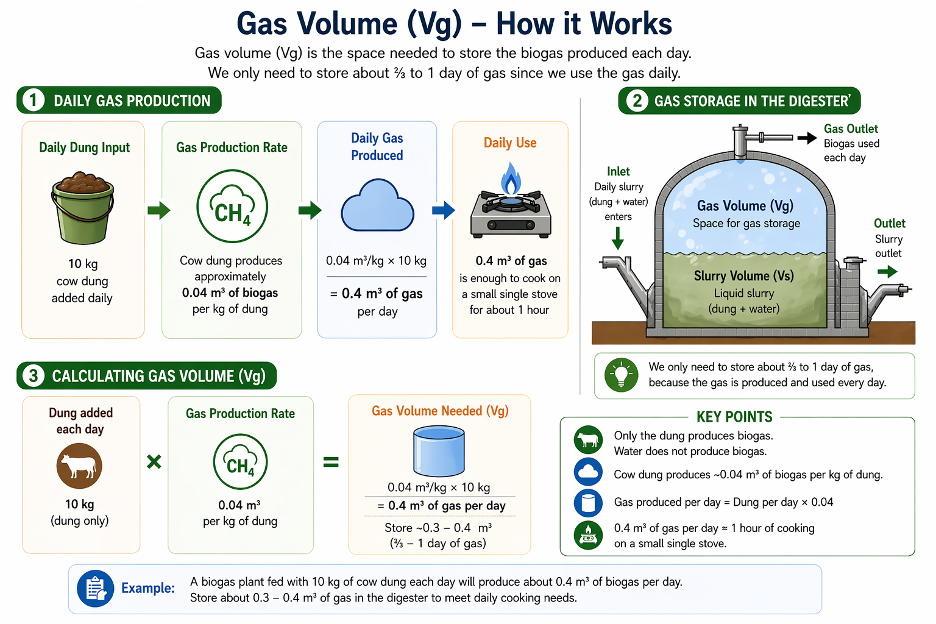
Fig. 5 How gas volume works: daily production rate, storage in the bag, and the Vg = 0.04 × daily dung input formula.#
Step 5: Total Digester Volume#
Total Volume = Vs + Vg
For our example: 1.6 + 0.8 = 2.4 m³
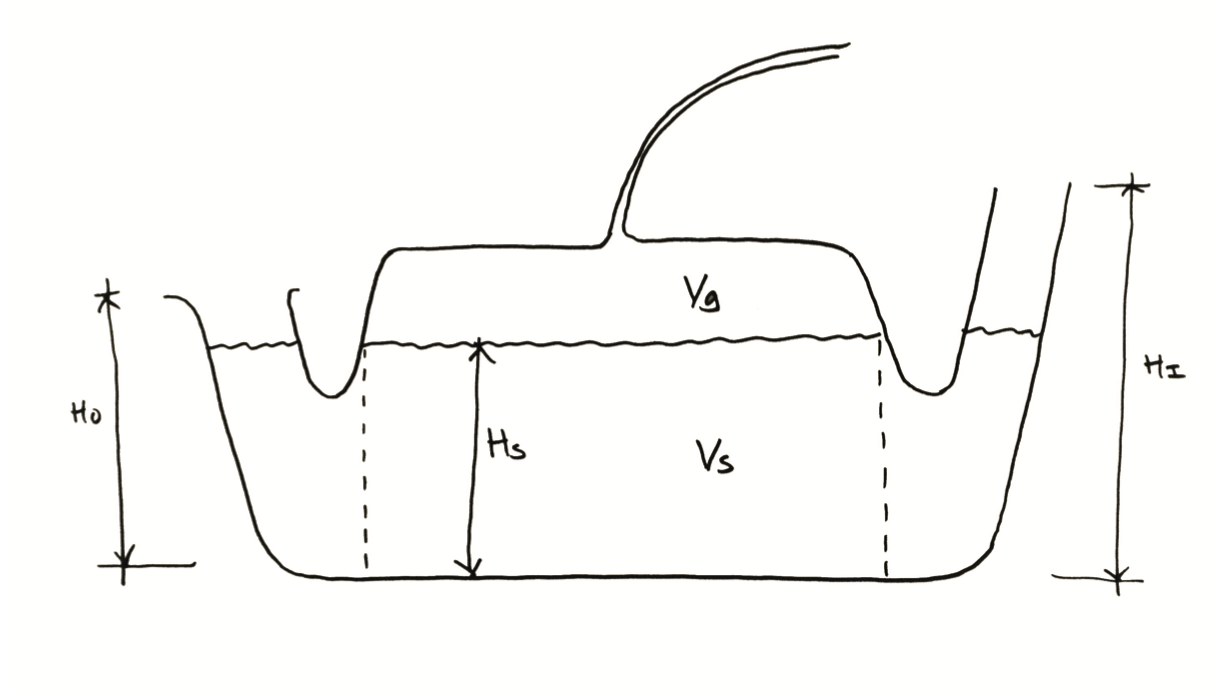
Fig. 6 Cross-section diagram of the CE Expanding Bag Digester showing slurry volume (Vs), gas volume (Vg), and the critical inlet/outlet height relationship.#
🧮 Interactive Sizing — Steps 3, 4 & 5
Adjust the sliders to see how Vs, Vg and total digester volume change in real time.
| Dung + water | 20 + 20 kg |
| Daily slurry | 40 kg = 0.040 m³ |
| × retention time | × 40 days |
| Formula | 0.04 m³ × kg/day |
| Daily dung | 20 kg/day |
| Gas storage | ~1 day's production |
Quick Reference: Common Digester Sizes#
Name |
Total Volume |
Cows needed |
Typical use |
|---|---|---|---|
Five Cow |
~2 m³ |
~5 cows |
Cooking twice daily on one stove |
Eight Cow |
~4 m³ |
~8 cows |
Cooking + some lighting |
Twenty Cow |
~8 m³ |
~20 cows |
Cooking + water heating |
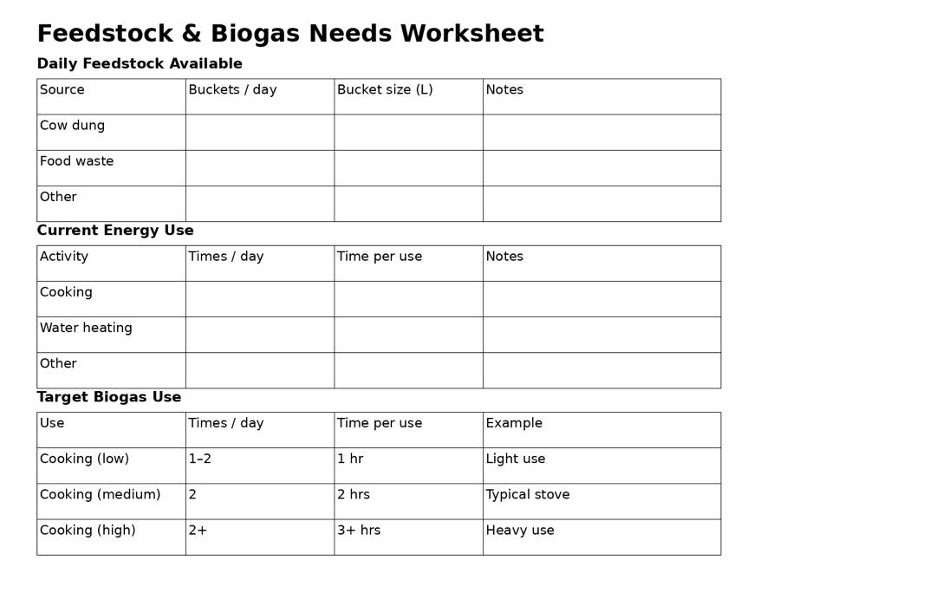
Fig. 7 Use this worksheet to record your daily feedstock, current energy use, and target biogas needs before sizing your digester.#
Session 2 Quiz#
MC Q1. Why is it harmful to oversize a biogas digester?
Number Q2. How many cubic metres (m³) of biogas does a single stove consume per hour?
Enter a decimal, e.g. 0.5
True / False Q3. The typical retention time for cow dung in a biogas digester is 40 days.
Number Q4. A farmer adds 10 kg dung + 10 kg water daily (1:1 mix) with a 40-day retention time. Calculate Vs in m³.
Vs = daily slurry input (m³/day) × retention time (days). 1 kg liquid ≈ 1 litre = 0.001 m³.
Fill in Q5. Using Vg = 0.04 m³ × kg of dung per day, what is the daily gas volume for 10 kg of dung? (m³/day)
Enter a decimal number.
MC Q6. Why should you start with what the farmer wants to use the biogas for when sizing a digester?
Summary#
Size the digester based on available feedstock and desired gas use.
Use the formula: Vs = daily slurry input × retention time
Gas volume: Vg = 0.04 m³ × daily kg of dung
Total volume = Vs + Vg
In the next session we will learn how to site your digester correctly.